By Farid Amiri · · An eleven-minute read
Digital flowers, and how to send one that means something.
Most digital flowers are a picture and a line of text, made in a minute and forgotten in another. A few are kept. The difference is rarely the flower: it is their name, your own words, the hour it arrives and, more than anything, the sound of your voice.
In short
- Digital flowers are flowers sent online: a picture, a bouquet arranged on a website, or a living flower that opens on their screen, sent by email or as a link, usually with a message.
- Nothing arrives at the door, so you don’t need their address: an email address or a way to message them is enough, in any country, at the hour you choose.
- They are the better gift for someone in hospital (many wards don’t allow flowers), someone with a cat (true lilies are poisonous to cats) or someone far away. Real flowers are better when you can hand them over, and at a funeral.
- A free bouquet maker is fine for a quick hello. Before you send one that matters, check how long its link lasts, who else can see it, and whether it can carry your voice.
- What makes one mean something is what comes with it: their name, a letter about something particular, and your own voice. In studies, people felt closer after talking than after writing to each other, and talking was no more awkward, though they expected it to be.
What are digital flowers?
Digital flowers are flowers given online. They arrive on a screen rather than at the door, by email or as a link in a message, and nothing needs a vase or water. They come in three kinds:
- A picture in an e-card: a photograph, drawing or animation chosen from a library and sent with a few lines.
- A digital bouquet: stems you arrange on a website and share as a link, usually free and usually with a typed note. A few add a piece of music.
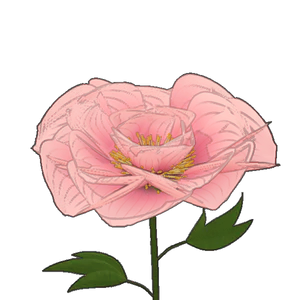
- A living flower: drawn in 3D in the browser, it opens as they watch, moves when they touch it and comes with sound. This is the kind we make, and each one grows from the words of its letter, so no two are alike.
Florists also sell cut flowers with a recorded message on a QR code, and some greeting cards carry a voice message. Those are real flowers, or cards, with a voice attached. This guide is about flowers that live on the screen.
How do you send digital flowers?
You make or choose the flower on a website, add your message, and it reaches them in one of three ways:
- By email, sent by the site, sometimes on a day you choose.
- As a link that you paste into a text, a WhatsApp message or an email of your own.
- As a QR code, printed on a card or tucked into a parcel, which opens the flower on their phone.
Because nothing is delivered, you don’t need their address. An email address, or any way to send them a message, is enough, wherever in the world they are. It costs the same to send to the next street as to Sydney, and it arrives in seconds.
If the day matters, choose a service that opens it at an hour in their time zone, not yours: a flower set for eight in the morning in London opens at three in the morning in New York.
Digital or real flowers?
Neither is simply better. Here is how cut flowers, a free digital bouquet and ours compare, so you can see what each can and can’t do.
| Compared | Cut flowers, delivered | A free digital bouquet | Say It In Bloom |
|---|---|---|---|
| What arrives | Flowers at the door, to hold and to smell | A picture and a typed note, by link | A living flower that opens on their screen, with music |
| What you need | Their address | A way to message them | Their email, or a way to message them |
| When | On a delivery day | When you send the link | The day and hour you choose, in their time zone |
| How long it lasts | Days, in water | As long as the site keeps the link | For 2 years, opened as often as they like |
| Your voice | Sometimes, on a QR card | Rarely | Your letter, read in your own voice, and a message |
| Their name | On the card | In the note | Played on the piano as the flower opens |
| A reply | Separately | Separately | In their own voice, as petals of your flower |
| Cost | The flowers and their delivery | Free | £5, everything included |
What a screen can’t give is scent, weight and a knock at the door. What it can give is what flowers alone can’t: the right hour, your voice, a reply, and a flower that can be opened again a year later. It is best opened somewhere quiet with the sound on; ours still opens with the sound off, with the letter to read and captions for your voice.
When is a digital flower the better choice?
Someone in hospital
Many hospitals in the UK don’t allow flowers on their wards, for infection control, allergies and the cleaning around beds. The rules differ from one hospital to the next, and from ward to ward, so the NHS suggests checking with the ward before bringing or sending any. Oxford’s hospitals, for one, allow none. A get-well flower on their phone needs no vase, no water and no space on the bedside table, and they can open it again on a long afternoon.
Someone with a cat
True lilies and day lilies are poisonous to cats. Every part of the plant is dangerous, the pollen and the water in the vase included, and a small amount can cause kidney failure (US Food and Drug Administration, International Cat Care). If a cat may have chewed a lily or licked its pollen, call a vet straight away. Send a cat owner another flower, or a lily they can only look at: the white lily in our book, Lilium candidum, is the Madonna lily on International Cat Care’s list, and on a screen it is harmless.
Someone far away
Cut flowers sent abroad depend on finding a florist who delivers there. A digital flower goes wherever an email or a message can, for the same price, and can be set to open at a sensible hour where they live.
When the hour matters
A delivery comes when the van does. A digital flower can wait, sealed, until the morning of their birthday or the evening of your anniversary, wherever they are.
Someone grieving, after the funeral
In the first days after a death, a home can fill with flowers that need tending. Weeks later, when the flowers have gone and the cards have stopped, a quiet flower with a few words in your voice asks nothing of them, and can be opened again on a hard day. Our sympathy flowers keep the print still and play quiet music, or only the sound of rain.
When are real flowers better?
When you can hand them over. Nothing on a screen replaces a bunch carried to the door, and if you can be there, take real ones.
At a funeral. Send flowers to the service itself, or give to the charity the family has named if they have asked for donations instead. A digital flower is for the person grieving, afterwards, not a tribute at the service.
When the flowers are the gift: for someone who loves to arrange them, keep them in water and watch them open over a week, or for a scent that fills a room.
You can also send both: real flowers to the door, and a few words in your voice to go with them.
Free or paid: what should you check?
For a quick hello, a free digital bouquet is fine. Before you send one that matters, check four things.
- How long it lasts. Some free links expire after a couple of weeks, and a site that closes takes its links with it. Ours open for 2 years.
- Who else can see it. Some sites show every bouquet made in a public gallery. Ours are private: only someone with the link can open one, and search engines are kept out of them.
- Whether it can carry your voice. Most carry only typed words.
- Whether you can choose when it opens. Most arrive the moment you send the link.
Ours costs £5 ($6 or €6), with everything included: the music, your voice, their reply and delivery on the day you choose. There is no subscription, and you pay only when you send.
How do you make a digital flower mean something?
A flower on a screen is easy to send, which makes it easy to send without much thought. The ones people keep have a few things in common.
Their name
Write to them, not to everyone: their name at the top, and a letter about them. Ours plays their name on a soft piano as the flower opens, a note for each letter, so every name is its own melody.
One particular thing
Skip the card’s usual line and say one particular thing: something they did, something you remember, what it changed. People who write letters of thanks tend to underestimate how surprised and pleased the reader will be, and to overestimate how awkward the reader will find it (Kumar and Epley, 2018). The note you hesitate over is likely to land better than you expect.
Your own voice
Hearing someone is not the same as reading them. In one study, people asked to get back in touch with an old friend mostly said they would rather email, expecting a call to be awkward. Those asked to call felt a stronger bond, and the call was no more awkward than an email (Kumar and Epley, 2021). In two others, girls aged seven to twelve who heard their mother’s voice on the phone after a stressful task showed the hormonal signs of comfort, much as girls comforted in person did; girls who exchanged instant messages with their mother did not (Seltzer and colleagues, 2010 and 2012).
Those were live conversations, and a recorded letter isn’t a call. But it keeps what the studies point to: the voice itself, with its warmth, its pauses and its accent. It doesn’t need to be polished. A stumble only makes it more plainly yours.
A way to answer
Let them reply. With ours they can answer in their own voice, for up to thirty seconds, and it comes back to you as petals of the flower you sent.
What should you write?
A few lines are enough if they are particular. One thought for each occasion, from our pages for them:
- Birthday: Say what this year was for them, or one thing you remember from it. Read it aloud and they hear you say it, a line at a time.
- Love: Nobody hears it but them. Write it as you would say it, then say it.
- Anniversary: An anniversary letter can be short: the year, one day in it, and what you would choose again.
- Valentine’s Day: Sign it, or don’t: the letter can end with your name, or only with your voice.
- Mother’s Day: She will hear your voice before she reads a word. Tell her something she did that you have never thanked her for.
- Thank you: Thank them for one particular thing, and say what it changed.
- Congratulations: Say what you saw them do to get here.
- Thinking of you: It doesn’t need news. Tell them what made you think of them today.
- Get well: Keep it light, and tell them one thing to look forward to.
- Sorry: Say what you did, say you’re sorry, and leave it there. Don’t explain it away.
- Sympathy: You don’t need to find the right words. A memory of the person they have lost is often the kindest thing.
- Just because: A line or two is enough.
Then read it aloud before you send it. A sentence that is hard to say is usually hard to read, too.
How do you send one with Say It In Bloom?
At the writing desk, one step at a time:
- Say who it’s for, and the occasion.
- Choose a flower from the eighteen in our book, or gather a posy of up to seven, and its paper: ivory, or Prussian blue.
- Write your letter, up to 2,000 characters.
- If you like, read it aloud, for up to three minutes, and leave a spoken message of up to a minute.
- Choose its music, or none.
- Choose how it reaches them: by email on the day and hour you choose, in their time zone, or as a link and QR code you send yourself.
- Pay £5. Until it reaches them, you can change its day, or cancel it and have your money back.
They receive a paper wrap, sealed with wax in your colour. One tap, and the flower opens as a soft piano plays their name; then your letter is written out on the page, in time with your voice if you read it to them. There is nothing to install, and neither of you signs up for anything.
Open a sample: Sam’s peony for Sofia, about a minute and a half, with sound.
Questions
- Are digital flowers a good gift?
- Yes, when what comes with them is personal: their name, a letter about something particular and, if you can, your own voice. They can’t be smelled or put in water, but they can arrive at the right hour anywhere in the world and be opened again long after cut flowers would have faded.
- Is it free to send virtual flowers?
- Many sites let you make and share a digital bouquet for free. Paid ones add things like your own voice, music, a chosen day and links that last. Ours costs £5 ($6 or €6), with everything included.
- Does the receiver need an app or an account?
- Not for ours. It opens in the browser of any phone or computer, from an email or a link, and neither of you signs up for anything.
- Can I send digital flowers by text or WhatsApp?
- Yes. Choose to send it yourself and you are given a link, and a QR code, to paste into any message or print on a card.
- Can I send digital flowers without their address?
- Yes. Nothing is delivered to a door, so an email address, or any way to send them a message, is enough, in any country.
- Can I schedule digital flowers for a birthday?
- Yes, with a service that lets you choose the day. Ours opens on the day and at the hour you choose, in their time zone; until then, its link shows a bud waiting to open.
- Can I send virtual flowers with music or a voice message?
- Yes. Ours comes with a piece of music for the occasion, or none if you prefer, and you can read your letter aloud (up to three minutes), leave a message of up to a minute, or both. Only your own voice is ever heard: nothing is read by a machine.
- Do digital flowers expire?
- Some do: free links can expire within weeks, or vanish when a site closes. Ours opens for 2 years, as often as they like, and they can keep a pressed plate of their flower, or a film of it, on their own device.
- Can you send flowers to someone in hospital in the UK?
- Check with the ward first: many NHS hospitals don’t allow flowers on their wards. A digital flower avoids the question, since it arrives on their phone and needs nothing from the ward.
Sources
- Visiting someone in hospital. NHS.
- Staying in hospital. Oxford University Hospitals NHS Foundation Trust.
- Lovely Lilies and Curious Cats: A Dangerous Combination. US Food and Drug Administration.
- Lily poisoning in cats. International Cat Care.
- Undervaluing Gratitude: Expressers Misunderstand the Consequences of Showing Appreciation. Amit Kumar and Nicholas Epley, Psychological Science (2018).
- It’s Surprisingly Nice to Hear You: Misunderstanding the Impact of Communication Media Can Lead to Suboptimal Choices of How to Connect With Others. Amit Kumar and Nicholas Epley, Journal of Experimental Psychology: General (2021).
- Social vocalizations can release oxytocin in humans. Leslie J. Seltzer, Toni E. Ziegler and Seth D. Pollak, Proceedings of the Royal Society B (2010).
- Instant messages vs. speech: hormones and why we still need to hear each other. Leslie J. Seltzer, Ashley R. Prososki, Toni E. Ziegler and Seth D. Pollak, Evolution and Human Behavior (2012).