A flower for someone grieving.
The print stays still: nothing comes to life around the flower. Choose quiet music; or none, and it opens to the sound of rain. Your words, in your voice, say that you are there.
Its flowers
The occasion’s own come first at the desk; any of the eighteen can be sent, alone or as a posy of up to seven. Each grows from the words of its letter, so no two are alike.
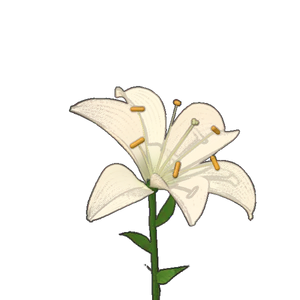 Plate XIII.White lilyLilium candidum
 Plate IX.Forget-me-notMyosotis sylvatica
Its paper
On ivory or on Prussian blue, the print stays still as the flower opens: nothing else comes to life on the page.
Its music
Pieces written for the book. As the flower opens, the music pauses and a soft piano plays their name, a note for each letter.
- Still Water · the occasion’s own
- A Quiet Word
- Window Seat
- No music · only the room’s own sounds, your voice and their name
Its day
Send it now, or choose the day and the hour it opens, in their time zone. It reaches them by email, or as a link and QR code you send yourself. Until it reaches them you can change its day, or cancel it and have your money back.
Writing it
You don’t need to find the right words. A memory of the person they have lost is often the kindest thing.
Open a sampleWhite lily for Margaret, from Ruth and David, as they would see it. With sound.
One price
£5 a flower, everything included. $6 · €6
- A living flower, grown from its own seed, so no two are alike
- Your letter, up to 2,000 characters
- Your own voice: read the letter to them, leave a message, or both
- Their name, played as a melody the moment the flower opens
- A signature piece of music for the occasion
- A wax seal in your colour, pressed with your initials
- Delivery by email on the day you choose, or by link and QR code
- A pressed plate of their flower to keep
- A note to you when they open it
- Their reply, in their own voice, sent back to you
From the blog
What are digital flowers? How to send one
What digital flowers are, how to send them, when they’re better than real ones and when they aren’t, and why your own voice makes one mean something.